
What Does a VFX Studio Know About Games?
OCTOBER 22 2026
More than you might think.
The lines between film, television and games aren’t what they used to be. The tools are crossing over. The craft is crossing over. And increasingly, so is the work.
We know that first-hand.
We’ve spent two seasons working on Twisted Metal, taking a world born in games and helping bring it to television. Our artists work in Unreal Engine, Houdini and Maya – tools that don’t particularly care which industry box you put them in. And more recently, our work for Sphere® in Las Vegas has taken us beyond the traditional screen altogether.
So, when we started looking more closely at the games industry, we found ourselves asking a slightly different question.
How different are these worlds, really?
Same tools. Different outcome.
Start with Unreal.
Born in games, Unreal Engine has become part of the filmmaking toolkit too, used across virtual production, animation, broadcast and live events. At Cause and FX, it sits within our own real-time and rendering work, alongside Houdini for simulation and effects and Maya for animation.
Follow those tools in the other direction and you’re quickly back in games.
Of course, sharing software doesn’t make the work the same. A game built to respond to a player is fundamentally different from a shot rendered for a television series. But there’s a sizeable bit in the middle where things get interesting.
For us, that crossover is as much about how the work moves as the tools themselves. In film and television, we’re constantly receiving assets built by other teams and adapting them for what a particular shot, renderer or environment needs. That might mean rebuilding materials, adding detail or taking an existing asset and developing it further without starting again.
It’s a process we already know well, and one that starts to look particularly relevant when those assets are coming from Unreal. Our own Unreal to Houdini workflow gives us a way to bring that work into our VFX pipeline and develop it further in an offline render environment.
“Game cinematics were an obvious starting point, because it’s where we can genuinely work as an extension of a team. They’ve built the world, we help push it further,” says Ambrose Challies, Business Development Manager at Cause and FX.
“There are already a lot of natural connections in the way we work. If a team’s building in Unreal, we can take those assets into our pipeline, develop them further and give them a film-grade finish, helping tell the kind of stories games do so well.”
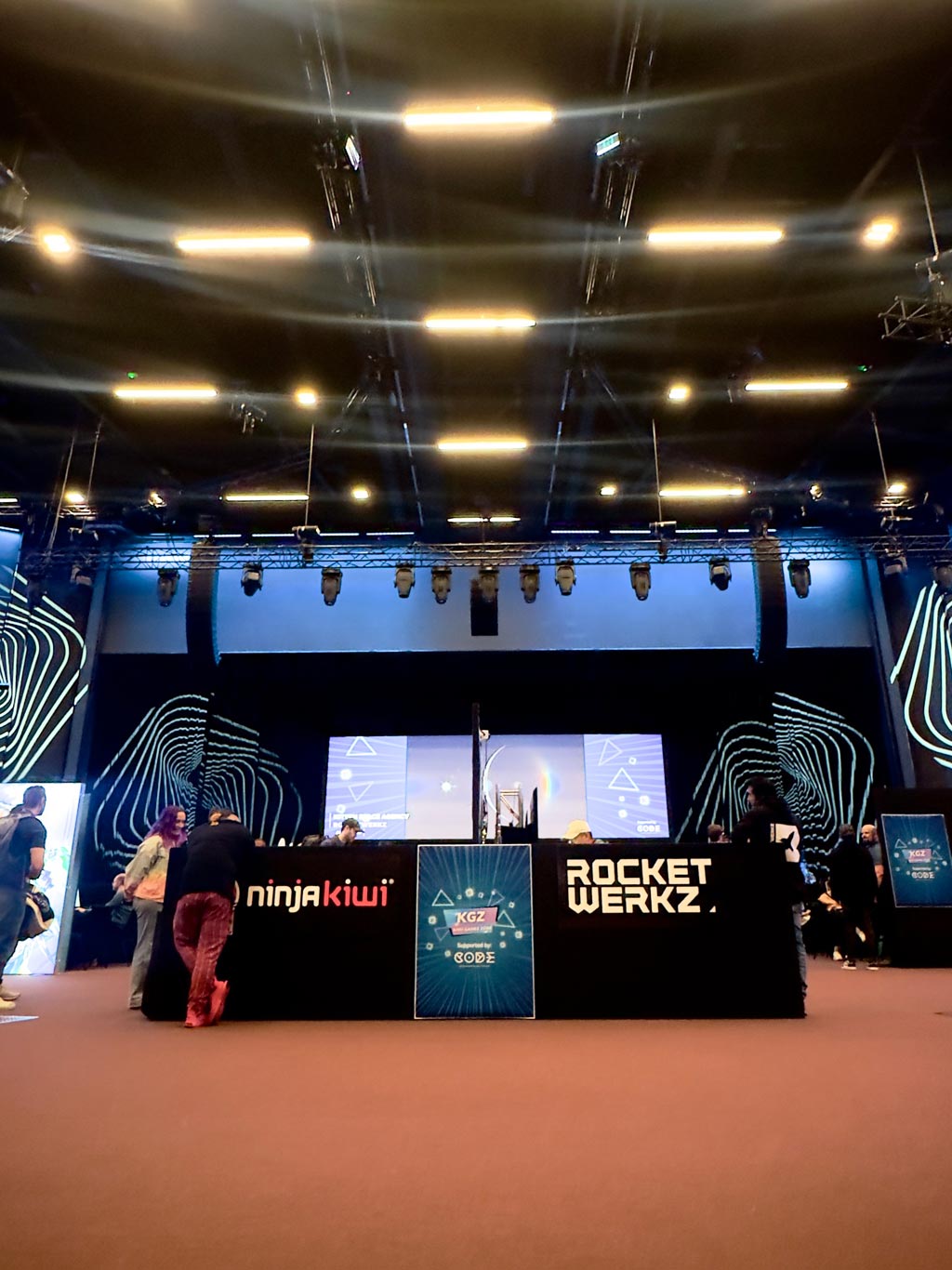
Ambrose Challies at the NZGDC 2026
A cinematic is still telling a story
Game trailers and cinematics are perhaps the most obvious crossover.
At their best, they’re tiny pieces of filmmaking. They establish a world, introduce characters, build anticipation and make you want to see what happens next – sometimes in the space of a couple of minutes.
The technical disciplines are familiar: animation, FX, lighting, environments and compositing. But it’s not simply about making something look beautiful. Games come with worlds of their own, and often audiences who know those worlds extraordinarily well. When you’re working inside an established universe, understanding what makes it that universe matters.
That’s something we know a little about.
Our work on Twisted Metal has spanned more than 500 shots across two seasons, with Cause and FX working as the primary VFX vendor. It wasn’t our job to reinvent Twisted Metal. It was our job to help translate its particular brand of chaos from one screen to another while making it work for the story being told.
Working on a game adaptation isn’t the same thing as creating a game cinematic, and we wouldn’t pretend it is. But understanding how to step into an established world, respect what makes it recognisable and then use your own craft to help push it somewhere new? That travels.
And then games escaped the screen
This was the part that caught our attention.
Start looking beyond the games themselves and you find an entertainment industry that is becoming very big, very physical and very live. Esports finals have become global entertainment events, with opening ceremonies combining cinematic content, AR and XR, real-time environments and virtual performers. Broadcast content interacts with physical stages. Characters that once existed inside a game can suddenly be performing in front of an arena full of people.
At that point, we’re not just talking about games anymore. We’re talking about spectacle.
“You’re talking about huge live events, real-time environments, characters and spectacle. Suddenly there are connections back to work we’ve already been doing in places like Sphere,” says Ambrose
And that is where another seemingly separate part of our work starts crossing over.
For Sphere®, our team created content at 16K by 16K using a pipeline between Unreal and Houdini that we built ourselves. At that scale, the traditional assumptions about how you create for a screen start changing pretty quickly.
So does the idea of where the audience sits.
They might be watching a television. They might be inside an experience with imagery surrounding them. They might be in an arena watching a live performance augmented by real-time content, or experiencing that same event through a broadcast on the other side of the world.
The technology is increasingly allowing those experiences to overlap. Epic Games’ work in virtual production shows just how far real-time game-engine technology has already moved across film, television, broadcast and live events.
The question becomes less about which industry a particular technique belongs to, and more about which combination of tools, technology and creative approaches best serves the experience you’re building.
Looking to the New Zealand market
Locally, the games sector has been quietly becoming a serious export industry. The New Zealand Game Developers Association reported $759.6 million in industry revenue for the 2024/25 financial year, up 38.6% year on year, with 95% generated through international consumer sales.
That’s not a small creative industry tinkering away on the edge of the global market. It’s another New Zealand screen and technology sector building work here and selling it to the world.
It also makes the crossover more interesting. New Zealand already has deep capability across film production, VFX, animation and creative technology. As games grow alongside those industries – and the tools and talent increasingly move between them – there is an opportunity to think less about separate sectors and more about the creative ecosystem we’re collectively building here.
Looking to the future
We’ve built our craft, our pipeline and a team accustomed to delivering ambitious work for some of the world’s biggest productions. But the interesting thing about where entertainment is heading is that those roots don’t dictate where that capability can go next.
Real-time technology that grew up in games is now helping filmmakers build worlds and make decisions differently. Film and television are drawing on some of the world’s biggest game IP. Cinematic storytelling is helping games make their entrance long before anyone picks up a controller. And games themselves are increasingly moving beyond the console into broadcasts, arenas and live experiences.
If there’s one thing we’ve learned from working in VFX, it’s that the most interesting projects rarely begin with someone saying, “Let’s do what we’ve always done.”
They’re much more likely to start with a question.
“Do you reckon we can make this happen?”
We dare to make it happen. Let’s talk.


